Google+
Showing posts sorted by date for query Algonquian. Sort by relevance Show all posts

Learning about Climate Change on Groundhog Day with Fun Facts about Groundhogs & Craft Round-Up


Disclosure: I was sent a copy of this book in exchange for an honest review. All opinions are my own.

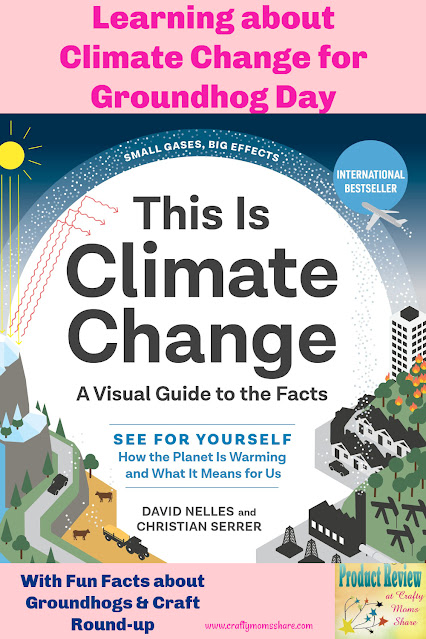
Did you see the Groundhog Day video I shared on Facebook? It is the annual Groundhog Day video of Ms. G, the official groundhog of Massachusetts. I like watching this video more than Punxsutawney Phil. One Ms. G is closer to me and has weather more like mine. Two, she isn't surrounded by all the news cameras with the extra lights to make shadows. Plus I love how they share a bit about groundhogs, animals and more. She lives at Mass Audubon's Drumlin Farm Wildlife Sanctuary. We loved visiting Drumlin Farm when Hazel was young. In the video they say Groundhog Day is also Climate Action Day. So today I'm going to share some fun facts about groundhogs with a small craft round-up and share with you a new book about climate change. We all need to be aware of climate change and take action to help stop/slow it. 

Native American Legends and Picture Books


Today I thought I would share some Native American picture books and legends with you. Hazel and I have been enjoying reading them and I find it such a wonderful way to share the Native American culture with Hazel as well as learn more about it myself. Some of these books we have had a chance to read and others we have not yet. However I wanted to give you a pretty comprehensive list. Also below is the blog hop and giveaway with a newly added bonus prize!! Make sure you enter this week!!

Thanksgiving Books and Being Thankful!

Congratulations to Rebecca P. for winning the Snowman and the Snowdog DVD! 


This year we discovered a great book that really helps hit home the whole Moms Fighting Hunger. Since Thanksgiving is so much about food around here, it is the perfect time to think about giving to those who do not have enough to eat. The book is The Can-Do Thanksgiving by Marion Hess Pomeranc. The story is about a class who does a can food drive and one little girl wants to know where her can will end up, so she writes her name and the school name on a label on it. The class gets invited to serve a Thanksgiving meal at a soup kitchen and the girl finds her can there. She also is able to save the day when the vegetable platter gets dropped on the floor. It is a great book about caring and sharing.

Hazel noticed the other day that the library was collecting food and asked about it. I told her that the library collects food for the local food pantry every November and December. If you bring in food for it, they forgive your overdue fines. Hazel wanted to bring some food to it, and since we were going to the grocery store I let her pick out some cans. Of course, I didn't take a picture of those, but I did buy some more to drop off there.


I hope you will join us in giving to those who are hungry this holiday season!


While on the topic of food, we did a quick corn craft. I am calling it our Thanksgiving Corn. I found it on Pinterest earlier today, but it comes from Highlights for Kids. I love how they do it for the Thanksgiving table, but we did it putting in things we are thankful for since we haven't done that yet this year. I also had Hazel use fingerprints to be the kernels since I knew she would not like drawing that many circles.


At Thanksgiving time we have fun reading books about Thanksgiving, turkeys and Native Americans. Here are some we have read and/or shared in the past:
 1) Thanksgiving on Plymouth Plantation by Diane Stanley
2) Gracias the Thanksgiving Turkey by Joy Cowley and Joe Cepeda (will be sharing about this one soon!)
3) 'Twas the Night Before Thanksgiving by Dav Pilkey
4) Squanto and The First Thanksgiving by Joyce K.Kessell and Lisa Donze and here
5) A Child's Story of Thanksgiving by Laura J. Rader
6) Turkey Trouble by Wendi Silvano
7) The Very First Americans by Cara Ashrose
8) The Naragansett by William S. Simmons
9)  Native American Stories by Joseph Bruchac
10) Children of the Wind and Water by Stephen Krensky
11) Algonquian Indians by June Behrens and Pauline Brower
12) The Wampanoag by Laurie Weinstein-Farson
13) Crafts for Thanksgiving by Kathy Ross
14) Messner Holiday Library Thanksgiving Fun by Judith Hoffman Corwin
15) Holiday Handiworks by Gillian Souter
16) Thanksgiving Day Crafts by Arlene and Herbert Erlbach 
     and more crafts here

We also shared a round-up of our Thanksgiving crafts here in case you missed it!

Fairy Tales in Different Cultures: Native American Cinderella 2

Check out the Little Pim Giveaway!


Last week I shared two Native American versions of Cinderella and I promised two more this week. All four are very similar and I think they all come from the Algonquian Native American tribes. Since I gave you a quick history of some of the Algonquian tribes last week, I'm not going into it this week. These stories however seem to be from tribes in Canada rather than the United States. 


The first story is called "The Indian Cinderella" and I found it in The Children's Book of Virtues edited by William J. Bennett. This story is definitely written to be an explanation of why the aspen leaves shake in the wind. In this story the tribe lives on a bay of the Atlantic Ocean. The second story is The Rough-Face Girl written by Rafe Martin and David Shannon. In this story the tribe lives on Lake Ontario.


Both stories are very similar. A few differences are that the girl comes from a poor family in one and is the daughter of a chief in the other. In both stories she is the youngest daughter of three and the older two are cruel to her. They dress her in rags and make her tend the fire or burn her with the coals to make her ugly. In both stories there is the Invisible Being who all the maidens want to marry. In one he got his magical power to be invisible from a god for whom he did good deeds. Similar to last week's stories, the sisters try to win the hand in marriage and fail. The youngest decides to try, but does not have the nice clothes or jewelry so she makes do with what she has and birch bark. In one story she is honest with the sister about not seeing the Invisible Being and is rewarded by being able to see him. In the other story she sees his face everywhere in the village. In both he has a bow made of the curve of the rainbow and the runner on his sleigh is the Milky Way. This is one of the few differences from last week's stories since sleighs/sleds were not mentioned in them. As in all the stories, she is able to see him and marries him. In one he turns her cruel sisters into aspen trees and he was called Strong Wind and this is why the leaves of the aspen shake so much in the wind. They fear him. 

Next week I will share our last Native American Cinderella which is different from these four. It is from the Zuni culture. I hope you will join me!


A Native American Cinderella

Have you entered my current giveaway yet?


This week we are exploring Native American versions of Cinderella. November is Native American History Month, so I thought in honor of this, we would share these versions. Thus far I have found four versions. All four seem very similar. I am going to share two with you today and the other two next week. This week we will discuss Little Firefly: An Algonquian Legend written and adapted by Terri Cholene and Sootface: An Ojibwa Cinderella Story retold by Robert D. San Souci. First a bit about the Algonquian and Ojibwa People.
Algonquian Lands (Source)

First there is no and never was an Algonquian tribe. Algonquian is a word used to describe the hundreds of tribes that spoke the Algonquian languages. The Ojibwa is one of the Algonquian tribes. This may be why these two stories are almost identical. The Algonquian People lived all over the United States and in Canada. (Source) Last year on the Wampanoag Tribe which is also an Algonquian group. The Wampanoag Tribe are the Native People who were at the first Thanksgiving with the pilgrims.
Wigwam Replica at Plimouth Planation
There are some similarities among most Algonquian tribes. Most Algonquian tribes had birchbark or dugout canoes. Hunters and warriors usually used bow and arrows, spears and wooden clubs. In these stories the great hunter used a bow and arrow. Most tribes had some form of a tribe council for its government with a leader or chief to preside over it. Most tribes lived in villages made of wigwams. In all four versions I have found wigwams are mentioned. The one article of clothing shared by all Algonquian tribes was moccasins. (Source)
Our Paper Mache Wigwam

The Ojibwa are also known as the Chippewa with different spellings for both. They are the largest group of Native Americans north of Mexico. They live in both the United States and Canada. In the United States they were the fourth largest tribe.
An Ojibwa woman and child, Red River Settlement, Manitoba, 1895
Source: By Humphrey Lloyd Hime via Library and Archives/
Bibliothèque et Archives Canada from Canada 
[Public domain or CC-BY-2.0], via Wikimedia Commons
Most Ojibwa bands were sedentary and lived in wigwams. (Source) The Ojibwa who lived on the plains lived in tipis. Traditional dress for women were long dresses with removable sleeves and for men it was breeclothes and leggings. Everyone wore moccasins.Women carried babies on cradle boards. (Source)

Since the stories all had wigwams in them, Hazel and I made models of wigwams. We used the instructions for these in More than Moccasins by Laurie Carlson. There were two ways to make the wigwams: with a coffee filter or a brown paper bag and glue. First you need five strips of white paper each one-inch wide. Tape two together to make a long strip and then make them form a loop. Use the other three to give the roof some structure. If you are using the coffee filter paint or color it brown. Hazel used her dot marker. Once it is dry glue it on. If you are using the paper bag, rip strips and mix glue with water to paper mache the strips on. We made one of each. Once the glue is dry you cut a door. You can also glue grass, bark or other natural things to make it look more real. We however had lots of rain, so we did not do this.

Now onto the stories. 

In these stories there is a man who has three daughters. The eldest two make the youngest do all the work and purposely burn her with the fire. She has scars on her face and hands and arms and her hair is short due to being singed. In one version her name is Little Firefly, but her sisters call her Little Burnt One, and in the other version she does not have a name, but her sisters call her Sootface. In both versions there is a great hunter who has the power to make himself invisible. The only person who can see him is his sister. It is said he will marry the woman who can see him. All the young women of the village try to win his hand. One day the eldest sisters decide to try separately. His sister greeted each of them and when they said they wanted to marry her brother, she asked them some questions. The questions were what is his bow made of and what is it strung with. The sisters guessed incorrectly and were sent home.

The next day Sootface or Little Firefly decided to try. (In one version her mother's spirit tells her to go and see The Invisible One in a dream.) Since she did not have a nice buckskin dress to wear like her sisters she made a dress from birch. She softens her father's old moccasins and does her best to fit them to her feet. Her sisters make fun of her as she goes, but she gets in her canoe and paddles across the water to the Invisible One's wigwam. His sister greets her. In Little Firefly she says she is there to help with the work, but the sister asks if she can see her brother. As he approaches she can see him and is able to answer that his bow is made of a rainbow and strung with the stars of the Milky Way or the Star Bridge of Souls. Upon hearing this, the sister takes the girl and washes her and her scars disappear. Then she gives her the finest buckskin dress to wear. She has her sit in the seat closest to the door which is the spot for the wife. The Invisible One comes home and is happy to meet his new wife.

Our Coffee Filter Wigwam

I hope you will join us next week for the other two versions that are very similar. Then we will have one version that is very different from these four. Tomorrow is the day for Virtual Book Club for Kids. This month's author is Karma Wilson. I hope you will come see which of her books we are sharing!


The Wampanoag Tribe

Since tomorrow is the third Monday of November and thus the day of the Virtual Book Club for Kids, I thought I would do a Multicultural Sunday instead of Monday. This week we are focusing on the Wampanoag Tribe mostly because this week is Thanksgiving and it seems only proper to look at the tribe that celebrated the first Thanksgiving with the Pilgrims. So to start, let's say, "Wuneekeesuq" (that is good day in Wampanoag). (Source)